Headroom
A lightweight Android utility for keeping Codex usage limits visible at a glance.
The problem
Codex usage is governed by rolling five-hour and weekly limits. The information is available, but checking it means leaving the task at hand and opening another interface.
I wanted the remaining allowance to behave more like ambient system information: visible when useful, without demanding attention.
What Headroom changes
Headroom brings those limits onto the phone.
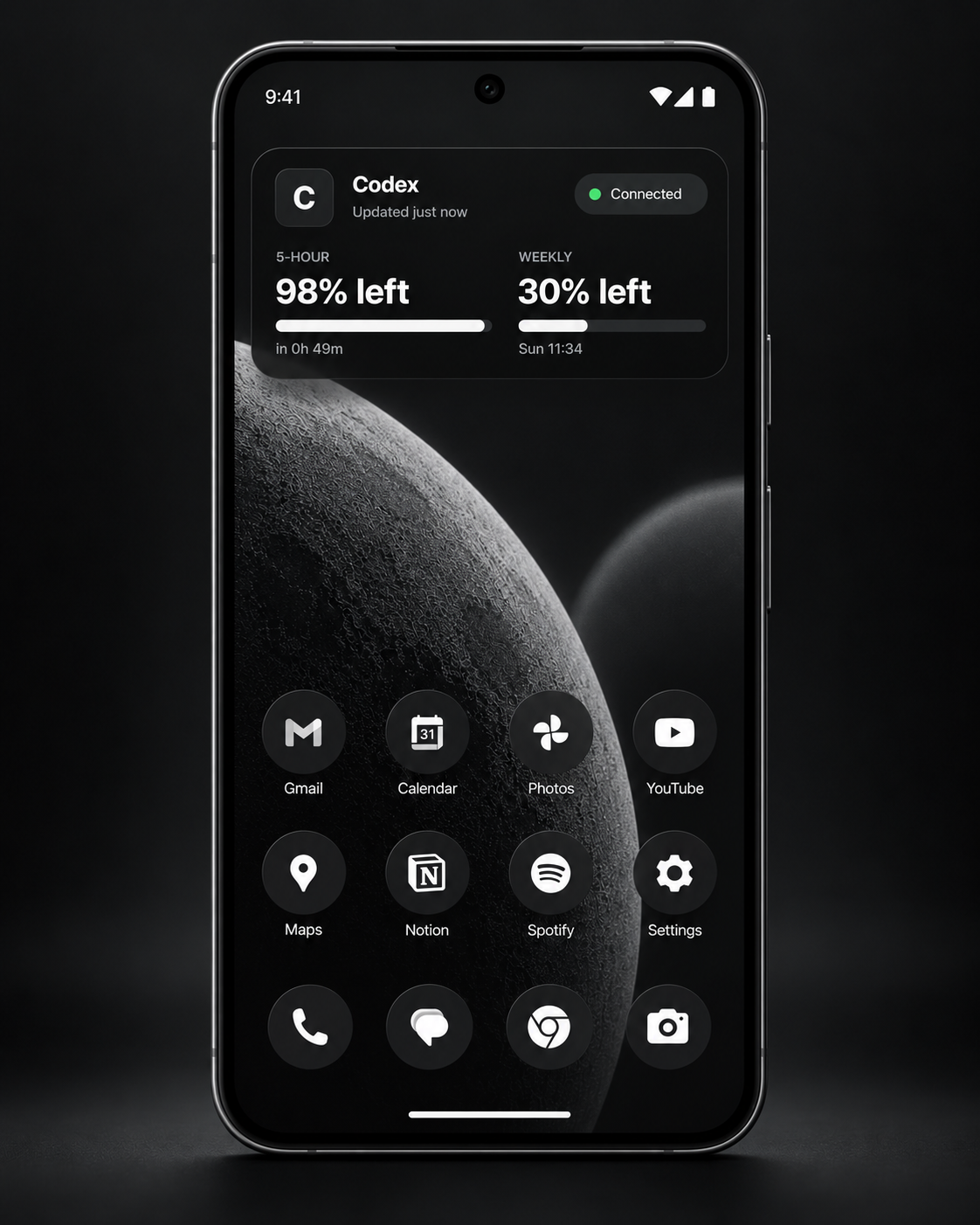
The app shows the remaining allowance across both usage windows, together with reset timing and the age of the latest reading. A home-screen widget keeps the same information visible without opening the app.
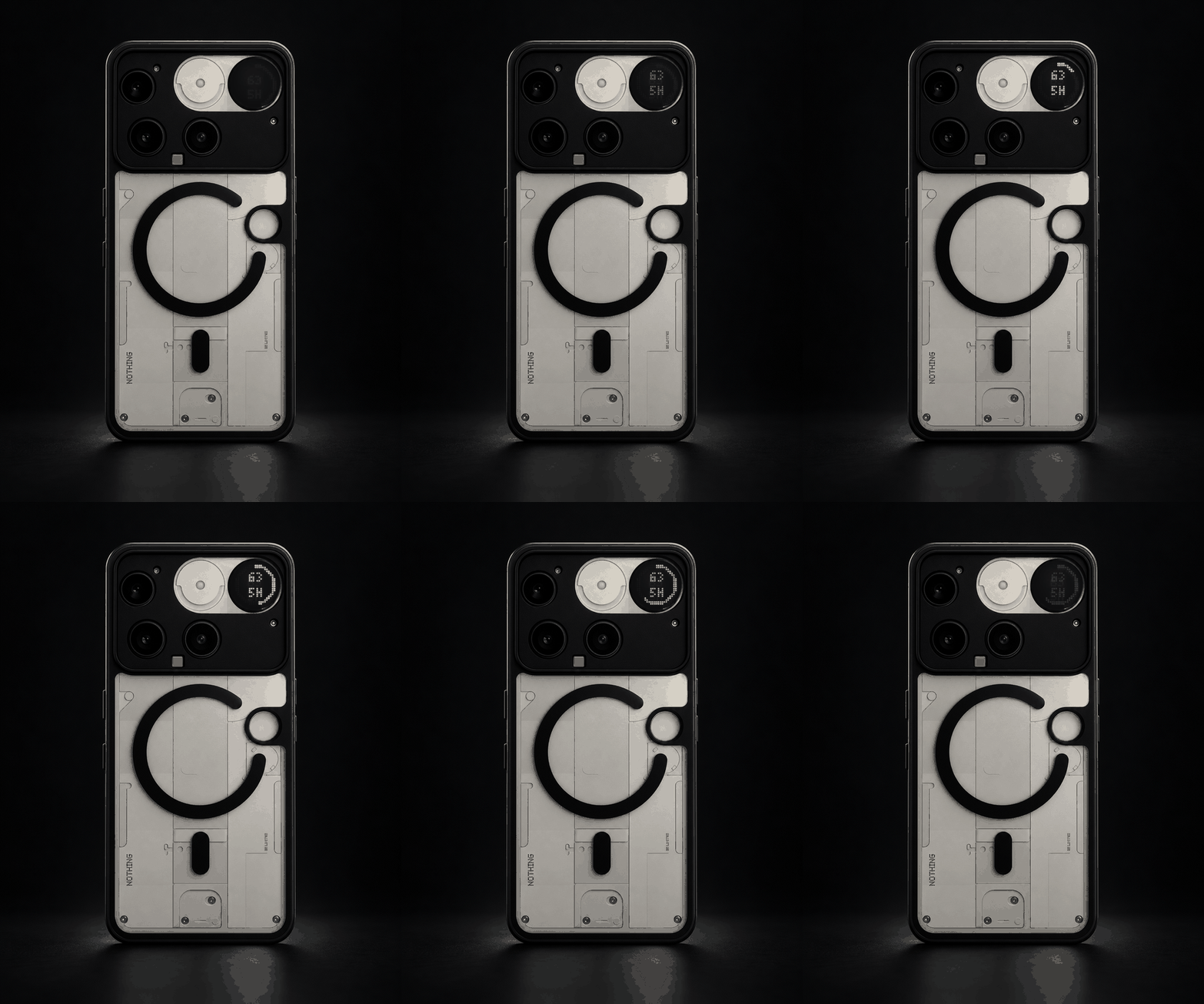
On the Nothing Phone (3), the same usage state is also available through a Glyph Toy on the rear of the phone.
How it works
Headroom signs into OpenAI through the browser using OAuth with PKCE. Credentials are encrypted locally using Android Keystore.
The app reads the current Codex usage state directly from OpenAI and normalises it into a small local snapshot. The dashboard, widget and Glyph Matrix all use that same state rather than maintaining separate versions of the data.
The underlying model is deliberately provider-neutral. Codex is the first integration, but another service such as Claude Code could be added later through its own usage adapter without redesigning the app, widget or other presentation surfaces.
Background refresh keeps the snapshot current where Android allows it. Opening the app or selecting the Glyph Toy can also refresh stale data, while the last successful values remain available if a refresh fails.
Designed for different levels of attention
Each surface deliberately carries a different amount of information.
The app provides both usage windows, reset timing and refresh status. The widget makes the same information glanceable from the home screen. The Glyph Matrix strips it back to the minimum useful view: percentage remaining and the active usage window.
Nothing's Glyph Matrix is a small 25×25 LED display on the rear of the Phone (3). Apps can extend it through Glyph Toys, compact utilities that can be selected and controlled using the phone's Glyph Button.
Headroom uses that surface as a simple usage meter. The five-hour allowance is shown by default because it is the more immediate constraint, with the percentage and remaining portion of the circular meter rendered directly on the Matrix. A long press switches to the weekly allowance.
Local by design
There is no separate Headroom backend.
Authentication credentials remain encrypted on the phone, usage requests go directly to OpenAI, and only the small usage snapshot is cached locally.
Keeping the architecture this small also means the widget and Glyph Toy can continue to show the last known state when connectivity or Android background execution is interrupted.
Technology
Development approach
The implementation was deliberately kept small, with the phone itself as the final test environment.
Much of the iteration came from the constraints of Android background execution and the Phone (3)'s 25×25 Glyph Matrix rather than from adding more features. Physical-device testing shaped details such as refresh behaviour, what remained legible on the Matrix, and the brightness difference between the active and unused portions of the usage ring.